
As AI Reshapes the Workplace, Emotional Intelligence Is the Skill That Makes Us Human.
Artificial Intelligence (AI) is evolving at an extraordinary pace—raising an urgent question: How soon will it transform the job market as we know it?
Research from Deloitte, BCG, and the International Labor Organization suggests that by 2045, nearly 50% of today’s jobs could be automated or significantly redefined. This isn’t a distant possibility—it’s already happening.
AI-driven technologies are rapidly embedding themselves across industries, fundamentally reshaping how we work, what we work on, and the value we bring.
What AI Does Best
AI excels at:
- Speed
- Scale
- Automation
- Data-driven efficiency
But thriving in this new era requires more than keeping up with technology. It requires strengthening the uniquely human skills that machines cannot replicate.
What Humans Do Best
To stay competitive, professionals must develop:
- Creativity
- Emotional Intelligence (EI)
- Complex problem-solving
AI processes information. Emotional intelligence gives that information meaning.
The organizations that will lead in the AI era won’t rely on technology alone—they will combine advanced systems with strong, human-centered leadership.
Workplace Readiness Skills Are Changing—Are You?
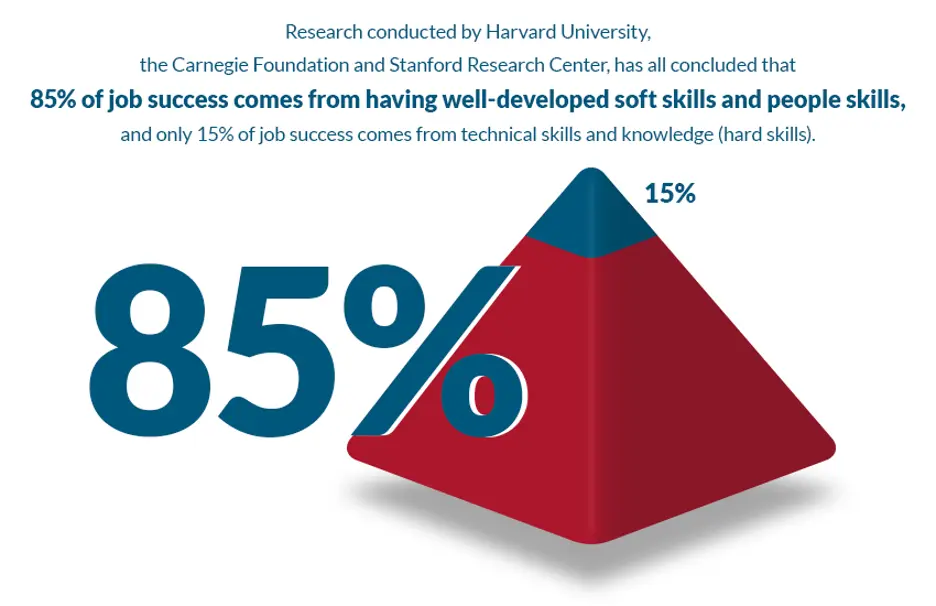
For over a century, career training programs in the United States have emphasized technical—or “hard”—skills, often at the expense of so-called “soft” skills.
This imbalance stems from outdated assumptions:
- That hard skills are teachable and measurable
- That soft skills are intangible, “touchy-feely,” and difficult to assess
But these assumptions are not only flawed—they’re costly. In fact, deficiencies in soft skills cost businesses billions of dollars annually in lost productivity, poor communication, and ineffective leadership. These long-standing misconceptions have contributed to the workforce challenges we face today.
What’s even more surprising? These concerns aren’t new. As early as 1918, Charles Riborg Mann’s A Study of Engineering Education highlighted the critical importance of non-technical skills in professional success. Over a century later, we are still grappling with the same issue—now amplified by rapid technological change.
Why Soft Skills Are So Hard to Teach
Today, many educators and employers agree: soft skills are difficult to teach—and just as difficult to learn.
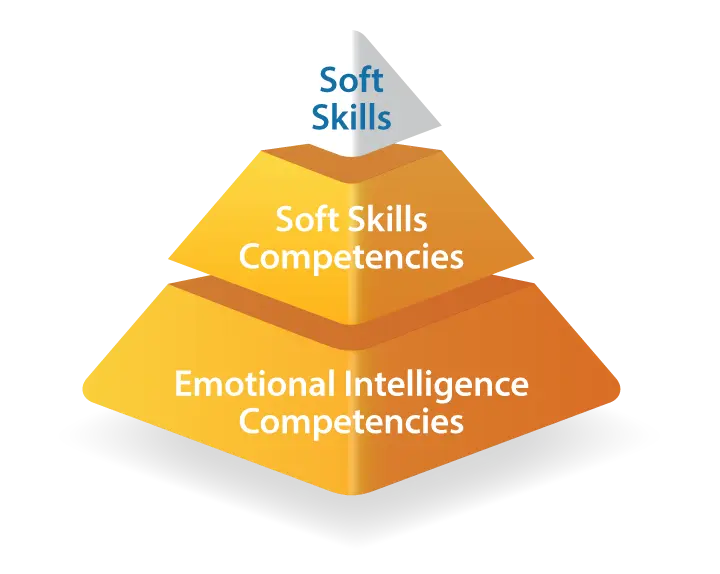
Why? Because soft skills are not isolated behaviors. They are built on a deeper foundation of emotional intelligence competencies—which are rarely taught explicitly in schools or workplaces.
Recent disruptions, including the COVID-19 pandemic, have only widened this gap, reducing opportunities for in-person interaction and skill development.
Emotional Intelligence: The Foundation of Everything
Emotional intelligence (EI) underpins every effective soft skill.
Here are a few examples:
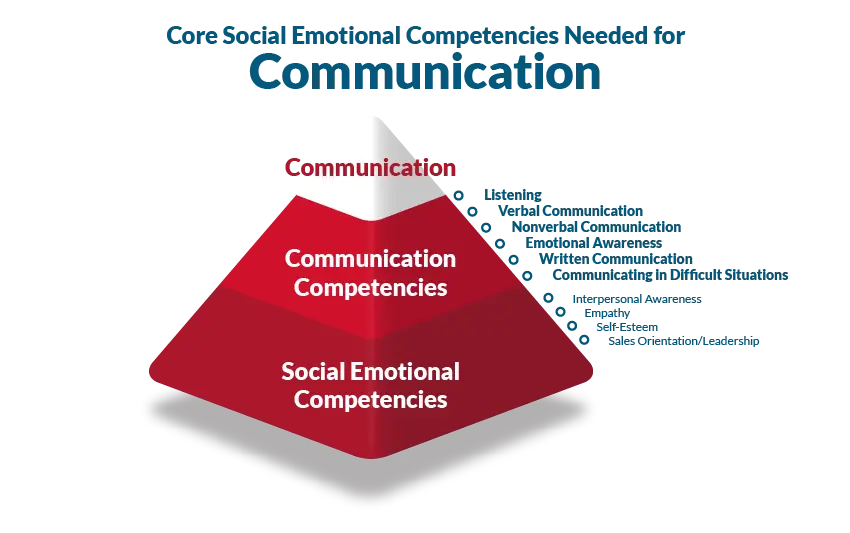
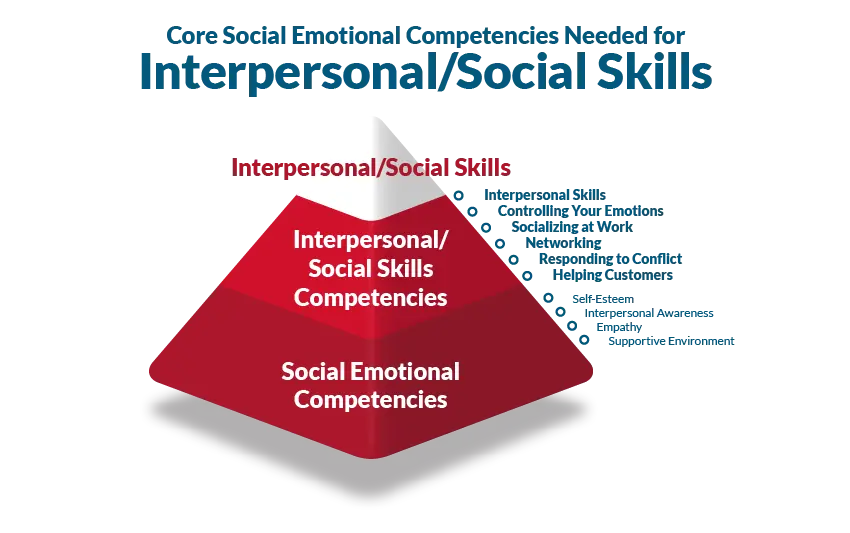
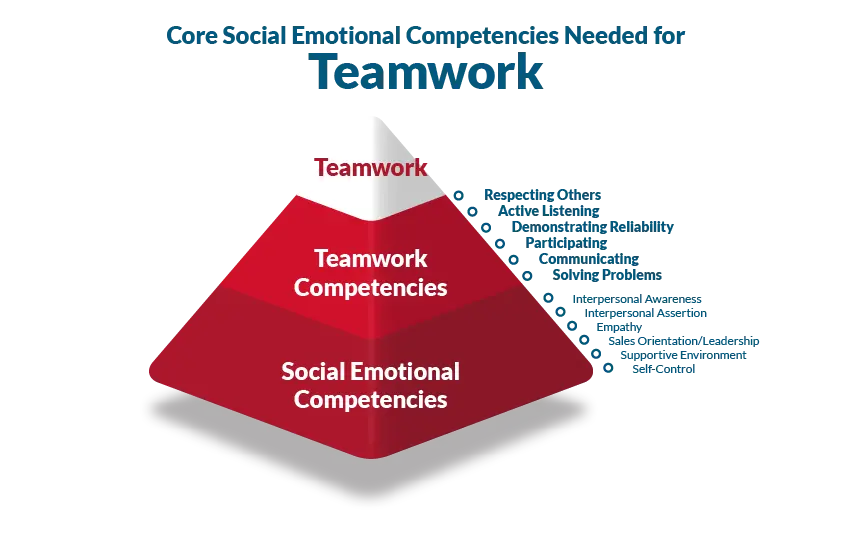
Think of it this way:
- EI competencies are the foundation
- Soft skills are the structure built on top
When training focuses only on surface-level behaviors—like communication techniques or teamwork strategies—it often fails to create lasting change. Without strengthening the underlying emotional competencies, performance improvements don’t stick.
To truly prepare individuals for the future of work, we must start with emotional intelligence and build upon that foundation.
The Path Forward
As AI continues to reshape the workplace, the most valuable employees won’t be those who compete with machines—but those who complement them.
Success will belong to individuals and organizations that:
- Integrate AI capabilities with human insight
- Prioritize emotional intelligence development
- Build cultures rooted in empathy, adaptability, and collaboration
